FromAED 3,620,000≈ USD 986,000
HandoverQ2 2030
Types1–5 BR
Payment40/60
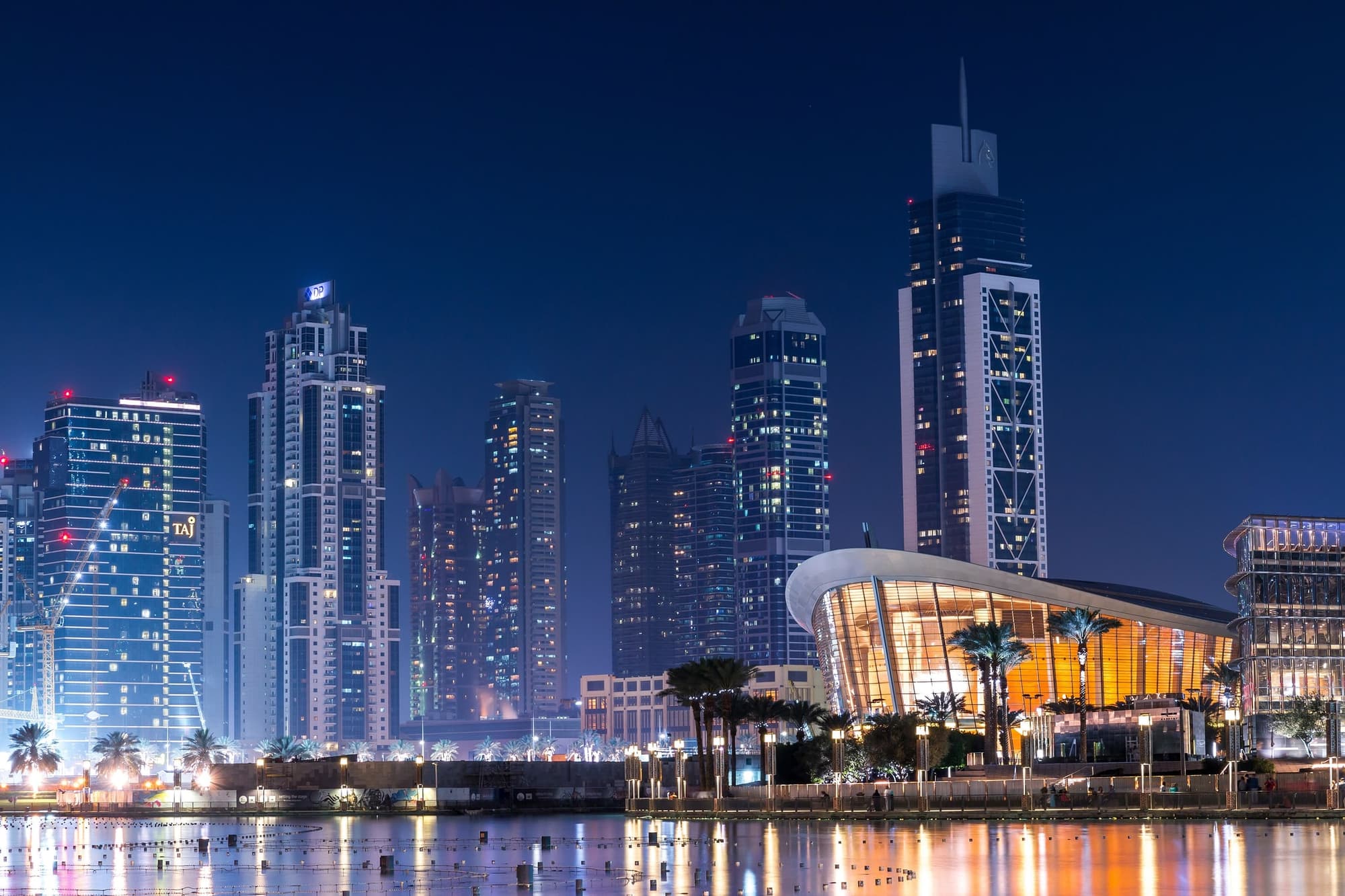
Downtown Dubai is the master community Emaar built around Burj Khalifa, The Dubai Mall and the lake with the Dubai Fountain. It sits on the inland side of Sheikh Zayed Road, between the financial district to the north and Business Bay to the south-east, and is almost entirely made up of apartment towers, hotels and serviced residences. For many buyers abroad it is the address most closely associated with the city, which shapes both demand and the way the district is used: residents share the streets with a steady flow of visitors to the tower, the mall and the opera house.
Most of the district is complete. New supply now comes from a limited number of remaining plots, many of them released as branded or hotel-serviced residences, so the market is shaped largely by resales and by rental demand from professionals working nearby. The median sale price per square foot over the last twelve months was AED 2,910, against AED 1,740 for Dubai as a whole, and the spread between buildings is wide: an apartment in one of the low-rise Old Town buildings and a residence in a tower facing the fountain are different products. The figures below are drawn from Dubai Land Department records and dated accordingly.
| Master developer | Emaar Properties |
|---|---|
| Size | About 500 acres (around 2 km²) |
| Property types | Apartments, penthouses, branded and hotel-serviced residences |
| Median sale price per sq ft, last 12 months | AED 2,910 (−0.6 % year on year) |
| Sales transactions, last 12 months | 2,489 (−38.1 % year on year) |
| Median annual rent, 1-bedroom apartment | AED 110,000 |
| Gross rental yield | About 6 % |
| Projects under construction | 14 projects, 4,918 units |
| Metro | Burj Khalifa/Dubai Mall station, Red Line |
Downtown lies on the eastern side of Sheikh Zayed Road, the main north–south artery of the city, with Financial Centre Road running through it towards DIFC and Business Bay. Al Khail Road, the second parallel route, is reached through Business Bay. The Red Line of the Dubai Metro stops at Burj Khalifa/Dubai Mall station on Sheikh Zayed Road, connected to the mall by an enclosed walkway; from there the line runs north through the financial district and the older city towards the airport, and south along the coast towards Dubai Marina. Within the district, Sheikh Mohammed bin Rashid Boulevard forms a loop that links most residential towers on foot.
NearbyResidents are mostly working professionals, many in finance, consulting and corporate roles in DIFC and Business Bay, along with couples and a smaller number of families in the larger units. A significant share of apartments is owned by investors living abroad, from Europe, the Gulf and Asia, and let either on annual contracts or as holiday homes. Owner-occupiers tend to concentrate in the older, larger-format buildings and in the Old Town, while the hotel-serviced towers attract buyers who want the apartment managed for them.
Daily lifeDaily life is lived largely on foot. The Dubai Mall covers groceries, pharmacies, clinics and most errands, and the Boulevard is lined with cafés and restaurants at street level. Souk Al Bahar and the promenade around the lake offer a quieter route in the evening, and Dubai Opera holds concerts, ballet and touring productions through the cooler months. Burj Park, beside the tower, is the main green space within the district.
The rhythm changes with the calendar. Weekday mornings are calm; weekend evenings and public holidays bring large crowds to the fountain and the mall, and the New Year's Eve fireworks lead to road closures across the district. For schools, larger parks and beaches, residents leave Downtown, usually by car.
Low-rise buildings in an Arabian architectural style, grouped around Souk Al Bahar and the southern side of the lake, with names such as Yansoon, Reehan, Miska, Zaafaran, Zanzabeel and Kamoon. Units are generally larger than in the towers and the streets are quieter. It is the part of Downtown most favoured by owner-occupiers.
The towers around Dubai Opera, across the lake from Burj Khalifa, including Act One | Act Two, Opera Grand, Grande and the Address Residences Dubai Opera. It is one of the more recently completed parts of Downtown, with direct views of the tower and the fountain from many units.
The core ring along Sheikh Mohammed bin Rashid Boulevard, with Burj Khalifa itself, Burj Vista, Boulevard Point and Emaar's early The Residences towers. This is where foot traffic and street-level dining are concentrated. The older towers here are well located but show their age in places.
Newer towers released on some of the last remaining plots, including St Regis Residences, Burj Royale and Burj Crown. Emaar itself described Burj Royale as the last opportunity to buy into Downtown. These buildings carry current specifications and, in the branded towers, hotel-operated services.
Tower clusters on the southern edge of Downtown towards Business Bay. Few units here look directly onto the fountain, and the buildings are mainly let on annual contracts to professionals working in Downtown and Business Bay.

As of 17 November 2026.
Information, not investment, tax or legal advice.